
70-Year-Old Ugandan Woman Gives Birth to Healthy Twins Through IVF
2 min read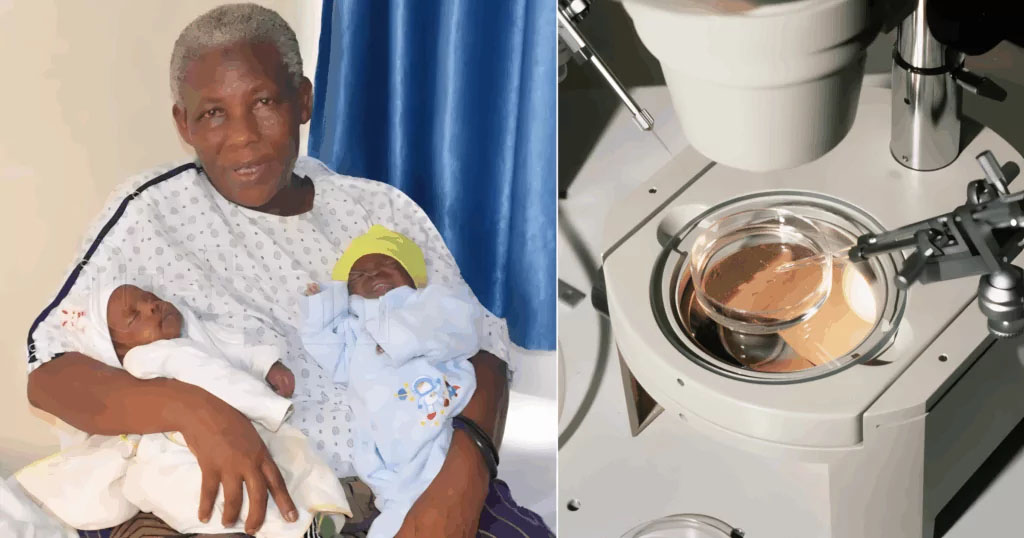
A 70-year-old woman from Uganda has amazed many people around the world after successfully giving birth to twins through IVF treatment.
Safina Namukwaya, from Uganda, delivered a healthy baby boy and a baby girl at a fertility hospital in Kampala. The rare birth has attracted attention globally, with many people describing it as a miracle and a major achievement in modern medicine.
This is not the first time Safina has made headlines. She also gave birth to her first child at the age of 66, making her one of the oldest women in the world to become a mother.
Doctors said the twins were born through In Vitro Fertilization (IVF), a medical process where an egg is fertilized in a laboratory before being placed into the woman’s womb. In her case, doctors used a donor egg to help her conceive.
According to Safina, she decided to continue pursuing motherhood despite facing criticism from some members of society for many years because she had no children.
Speaking after the successful delivery, she said many people used to mock her because of infertility, but she never lost hope.
Doctors who handled her pregnancy described it as high-risk because of her age, but they closely monitored her health throughout the journey. She attended regular clinic visits, received proper medical care, and followed doctors’ advice carefully.
The twins were delivered through a Caesarean section, and doctors confirmed that both babies were born healthy.
Dr. Edward Tamale Sali, who was part of the medical team, said the case shows how modern fertility technology is changing lives in Africa and across the world.
“This is an important achievement in fertility treatment. With proper medical care and planning, older women can still become mothers,” the doctor explained.
However, the story has also started a debate online and among health experts. Some people believe pregnancies at an advanced age can come with serious health risks for both the mother and children.
Others, however, believe every woman should have the freedom to decide when to become a mother, especially if medical technology can safely help them.
Across social media, many people congratulated Safina and described her story as inspiring and hopeful to women struggling with infertility.
Safina said she is thankful for the opportunity and plans to raise the twins with support from family members and her church community.
Her story continues to trend online as many people discuss the role of science, faith, and motherhood in modern society.
 Click to Join Our WhatsApp Channel