
Kenya Plans Military Escort for Export Ships as Middle East Crisis Hits Trade
2 min read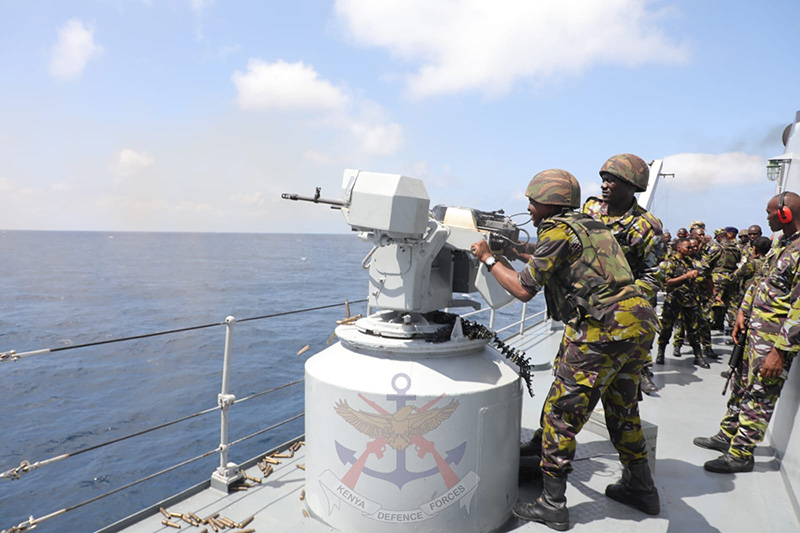
The Kenyan government is considering using military escorts to protect export ships heading to the Middle East as the ongoing conflict in the region continues to disrupt major trade routes.
Speaking during an interview on NTV Kenya, Industry Principal Secretary Juma Mukhwana revealed that the government is exploring ways to ensure safe delivery of goods through risky sea routes.
According to Mukhwana, one of the options being discussed is deploying security escorts for cargo ships passing through dangerous waters. He noted that other countries have already adopted similar measures to protect their exports.
Plan to Consolidate Cargo for Safer Shipping
The government is also looking at combining goods from different exporters into one shipment before sending them to key destinations like Jeddah.
Mukhwana said this approach would involve working closely with the Kenya National Chamber of Commerce and Industry to organize and manage shipments.
“We want exporters to bring their goods together so that we can plan secure transport and ensure they reach their destinations safely,” he explained.
Challenges Facing the Plan
Despite the proposal, the government faces several challenges. Kenya currently does not have its own national shipping line, making it dependent on foreign vessels. In addition, high insurance costs for ships traveling through conflict zones remain a major concern.
However, Mukhwana insisted that Kenya can still move forward, especially since other nations are already escorting their ships through unsafe areas.
The government is also considering a mixed approach to transport. Ships could be escorted by the Kenya Defence Forces up to safer regions such as the Red Sea.
From there, goods could be moved using alternative methods like air transport or regional distribution networks to reach final destinations.
What the Operation Would Involve
If approved, the plan would require coordination between multiple agencies. These include the Kenya Maritime Authority, international security partners, port officials, and private shipping companies.
There would also be a need for diplomatic agreements, insurance arrangements, and intelligence sharing to ensure ships move safely through international waters.
Exporters Already Feeling the Impact
Exporters in Kenya are already facing heavy losses due to the disruption. Many businesses depend on the Middle East market, especially for fresh produce and other goods.
The Kenya National Chamber of Commerce and Industry says export volumes have dropped sharply in recent weeks.
Its President, Eric Ruto, warned that exporters are losing between Ksh800 million and Ksh1.2 billion every week.
He added that if the situation continues, many companies may be forced to reduce operations or lay off workers, putting thousands of jobs at risk.
 Click to Join Our WhatsApp Channel