How New NSSF Deductions Will Change Kenyan Payslips From February 2026
3 min read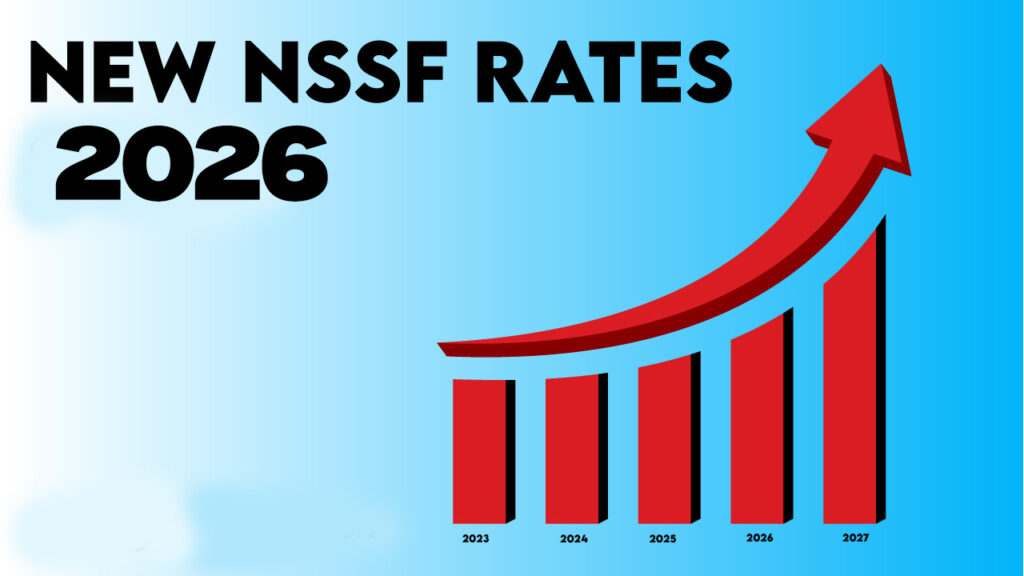
How New NSSF Deductions Will Change Kenyan Payslips From February 2026
Kenyans should prepare for new changes on their payslips starting February 2026, following the next phase of pension reforms under the National Social Security Fund (NSSF) Act, 2013.
The changes are part of a long-term plan by the government to increase retirement savings by raising the salary limits used to calculate NSSF contributions, not the contribution rate itself.
Why NSSF Deductions Are Increasing
Under the law, all employees aged 18 years and above who are not yet retired are required to contribute 6% of their pensionable income to the NSSF.
Employers are required to match this amount, meaning whatever is deducted from your payslip is doubled in your retirement savings.
Since 2023, the government has been rolling out these changes in phases, gradually increasing the salary limits used to calculate contributions.
Understanding NSSF Tier I and Tier II
The NSSF system is divided into two tiers:
-
Tier I – Applies to lower earnings and is mandatory
-
Tier II – Applies to higher earnings and can be paid either to NSSF or approved private pension schemes (with approval from the Retirement Benefits Authority)
Each year, the government raises the salary limits for these tiers.
New NSSF Limits Starting February 2026
From February 2026, the new limits will be:
-
Tier I limit: Ksh 9,000
-
Tier II limit: Ksh 108,000
This marks the fourth phase of implementing the NSSF Act reforms.
How Much Will Be Deducted From Your Salary?
Example 1: Employee earning Ksh 100,000
-
Tier I: 6% of Ksh 9,000 = Ksh 540
-
Tier II: 6% of Ksh 91,000 = Ksh 5,460
Total employee deduction: Ksh 6,000
Employer adds: Ksh 6,000
Total monthly savings: Ksh 12,000
This is an increase from the current deduction of Ksh 4,320.
Example 2: Employee earning Ksh 200,000 or more
-
Tier I: Ksh 540
-
Tier II (capped): 6% of Ksh 99,000 = Ksh 5,940
Total employee deduction: Ksh 6,480
Employer contribution: Ksh 6,480
Total monthly remittance: Ksh 12,960
Who Will Be Affected the Most?
-
Middle- and high-income earners (above Ksh 75,000) will feel the biggest change
-
Employees earning below Ksh 50,000 will not be affected, as their contributions remain within current limits
-
Salaries of Ksh 25,000, Ksh 35,000, and Ksh 50,000 will stay unchanged
Will Take-Home Pay Be Reduced Fully?
Not exactly.
NSSF contributions are tax-deductible, meaning the actual drop in take-home pay will be lower than the increase in deductions.
For top earners, the actual reduction on the payslip will be approximately Ksh 1,512, rather than the full increase of over Ksh 2,000.
Employees in approved private pension schemes may also feel less impact if employers adjust contributions with approval from the regulator.
Growth of NSSF and Worker Concerns
The higher deductions have made NSSF the largest pension fund in Kenya.
-
Assets grew to Ksh 558 billion by June 2025
-
Annual contributions jumped from Ksh 19.29 billion in 2022 to Ksh 83.97 billion in 2025
-
Annual inflows are expected to exceed Ksh 100 billion after 2026
However, these changes come at a time when workers are already facing reduced disposable income due to other deductions such as the housing levy and healthcare contributions.
Employer Responsibilities
By law, employers must submit NSSF deductions by the 9th day of the following month.
Late payments attract penalties and fines.
 Click to Join Our WhatsApp Channel