
Duale Moves to Stop Foreign Doctors and Increase Employment for Qualified Kenyan Practitioners
2 min read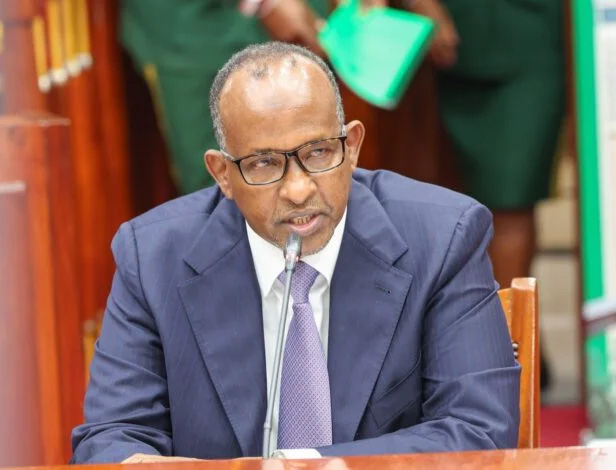
Duale Moves to Stop Foreign Doctors and Increase Employment for Qualified Kenyan Practitioners
Health Cabinet Secretary Aden Duale has unveiled a new policy aimed at prioritising Kenyan health professionals in licensing and deployment, while limiting routine approvals for foreign doctors and other medical practitioners.
Announcing the changes on January 7, 2026, CS Duale said the policy seeks to protect taxpayer investments in medical training, strengthen Kenya’s local health workforce, and ensure high standards of patient safety.
“Our focus is on ensuring that Kenyan-trained doctors, nurses, and specialists are given first opportunity to serve in the health sector before foreign professionals are considered,” he stated.

Prioritising Locally Trained Health Workers
Duale highlighted that Kenya has made significant public investments in training medical personnel at both undergraduate and postgraduate levels. These investments are funded by taxpayers, and the new policy ensures that employment opportunities benefit Kenyans first.
“It is only fair that Kenyans trained with public resources are prioritised to serve our country,” the Ministry said.
The Ministry noted that prioritising local health workers is consistent with international labour and health standards. Guidance from the International Labour Organisation (ILO) and the World Health Organisation (WHO) emphasises that sustainable health systems depend primarily on a country’s domestic workforce.
“No nation has successfully built a resilient health system relying mainly on foreign professionals,” the Ministry explained.
The policy does not close Kenya off from foreign expertise but allows limited, regulated entry of foreign health practitioners where local skills are scarce or in emerging specialisations.
CS Duale confirmed that the policy does not apply to doctors and other health workers from East African Community (EAC) member states. Kenya will continue to honour reciprocal agreements, allowing qualified professionals from partner countries to work under regulated conditions.
For non-EAC countries, foreign licensing will be reviewed case by case, particularly in specialised areas where Kenyan capacity is limited. Any foreign professional engagement must contribute to knowledge transfer and support the local health system rather than replace Kenyan workers.
Safeguarding Patient Safety and Standards
The Ministry also emphasised that patient safety and professional integrity will remain top priorities. Licensing decisions will ensure that all practitioners meet Kenyan legal requirements and maintain international professional standards.
“All foreign health professional approvals will be carefully considered to protect patients and strengthen our workforce,” CS Duale said.
 Click to Join Our WhatsApp Channel


