Uganda Confirms Two Ebola Cases as Border Surveillance Tightened
3 min read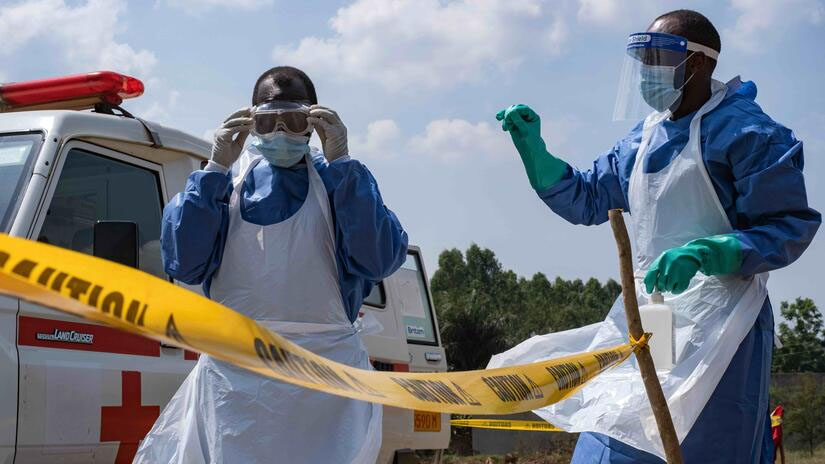
Uganda has confirmed two imported cases of the deadly Ebola virus linked to the ongoing outbreak in the Democratic Republic of Congo (DRC), forcing health authorities to tighten surveillance and emergency response measures across the country.
According to Uganda’s Ministry of Health Permanent Secretary Diana Atwine, one patient died while the second patient is currently recovering after testing negative for Ebola on May 18 and May 20.
Speaking during a media briefing on Thursday, Atwine said health officials had already traced and quarantined 127 people who came into contact with the infected patients as part of efforts to stop further spread of the disease.
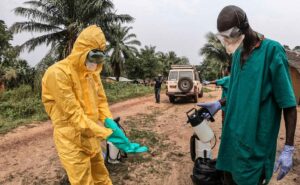
The Ugandan government has now activated national emergency response systems under the National Task Force chaired by the Vice President.
Authorities have also increased public awareness campaigns, strengthened screening at border points and temporarily suspended some transport activities between Uganda and the DRC.
In addition, the Ministry of Health announced tighter border patrols, suspension of weekly markets in some border areas and restrictions on large public gatherings in regions considered high-risk.
Despite the outbreak concerns, the government confirmed that schools will reopen as planned, although all institutions must strictly follow health guidelines issued by the Ministry of Health.
Atwine urged citizens to stay calm, maintain proper hygiene and quickly report anyone showing Ebola-like symptoms to the nearest health facility.
The latest cases come as the World Health Organization (WHO) continues to monitor the growing Ebola outbreak in eastern DRC involving the rare Bundibugyo strain, which currently has no approved vaccine or specific treatment.
WHO recently declared the outbreak a Public Health Emergency of International Concern due to the increasing number of infections and growing cross-border spread.
Reports from WHO indicate that DRC has recorded over 500 suspected Ebola cases and at least 130 suspected deaths, although only a small number have been officially confirmed through laboratory testing.
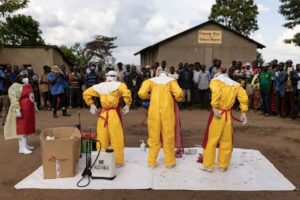
The outbreak has mainly affected the provinces of Ituri and North Kivu, including towns such as Bunia, Butembo and Goma.
Health experts say the Bundibugyo strain is difficult to detect early because its symptoms — including fever, vomiting, diarrhoea and fatigue — are similar to many common illnesses.
WHO has already deployed medical experts, testing equipment and emergency supplies to affected areas while also increasing public awareness campaigns aimed at reducing infections within homes and during burials.
The outbreak has also raised international concern over travel and possible cross-border transmission.
In response, the United States government introduced stricter screening measures for travellers arriving from Ebola-affected countries such as DRC, Uganda and South Sudan.
Under the new rules, travellers who recently visited the affected countries will be required to enter the US through Washington Dulles International Airport for special health screening.
US health officials said the move is meant to improve early detection and prevent possible spread of the virus.
The US Centers for Disease Control and Prevention (CDC) warned that Ebola is a highly infectious disease spread through direct contact with bodily fluids such as blood, vomit and other secretions.
Meanwhile, WHO has airlifted nearly 11 tonnes of emergency medical supplies and protective equipment from Nairobi to support health workers battling the outbreak in DRC.
 Click to Join Our WhatsApp Channel